AI Software and Analytics for Utilities
Artificial intelligence (AI) software helps utility organizations interpret operational data, identify abnormal conditions, and support decisions involving critical infrastructure. Its practical value depends on the quality of available data, the operating environment, the reliability of analytical outputs, and how results fit existing utility workflows.
Explore AI Applications ↘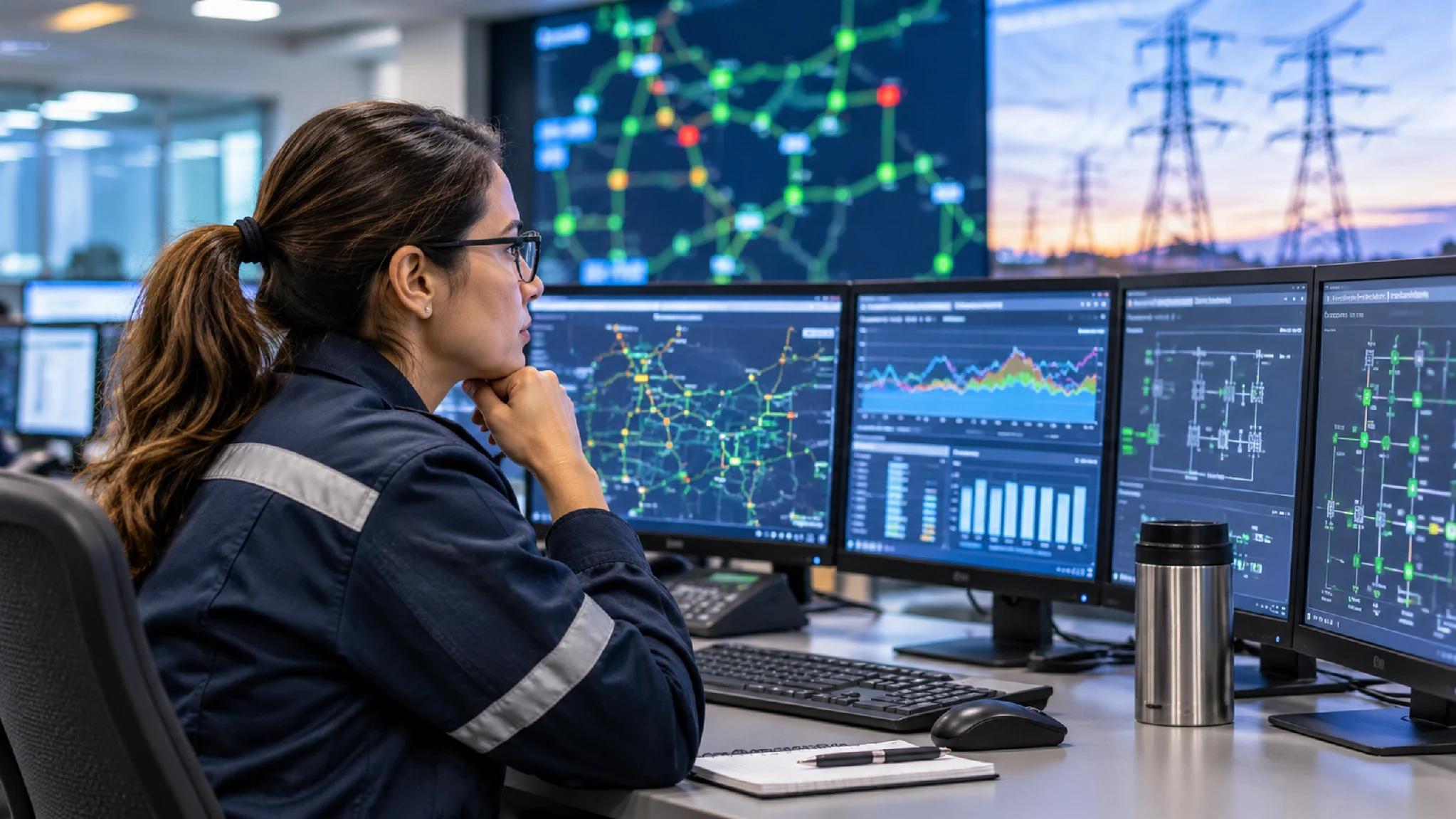
Turning Utility Data into Useful Operational Information
UtilityGrid focuses on Physical AI and Artificial Intelligence of Things (AIoT) technologies for utility operations. This includes applications involving electrical distribution networks, substations, transformers, generation facilities, water infrastructure, pumping systems, and other utility assets.
From equipment condition analysis to operational forecasting, AI software must work with relevant physical measurements, historical records, asset information, and operating constraints.
The objective is to turn those inputs into useful information that engineers, control room operators, maintenance teams, and utility managers can review and act upon.
AI Software in Utility Operations
Utility environments generate information from supervisory control and data acquisition (SCADA) systems, intelligent electronic devices (IEDs), remote terminal units (RTUs), smart meters, protection systems, equipment sensors, inspection records, and enterprise applications.
Electrical Asset Condition Analysis
Evaluate transformer temperature, load history, electrical measurements, and other relevant indicators to identify unusual operating patterns. Analytical outputs can help engineers review equipment conditions in the context of actual operating history.
Distribution Network Monitoring
Analyze voltage, current, power quality, and equipment status data to identify anomalies requiring engineering review. The analysis should account for operating conditions and differences between normal variation and potentially significant events.
Predictive Maintenance Support
Examine historical equipment behavior and maintenance records to help prioritize inspections and maintenance activities. Predictions should be assessed against documented equipment outcomes and relevant maintenance evidence.
Water and Wastewater Infrastructure Analytics
Evaluate pump operating conditions, pressure, flow, motor behavior, and other process measurements. Analytical methods can help identify operating patterns that warrant further technical assessment.
Utility Inspection Analysis
Apply computer vision to relevant inspection images to identify visible equipment conditions requiring further assessment. Image quality, viewing conditions, and asset characteristics influence the reliability of inspection analysis.
Operational Forecasting
Analyze historical demand, operating conditions, and available resource information to support planning and operational decisions. The suitability of each method depends on the available data, the specific equipment, and the decision that the utility organization needs to support.
Data Preparation for Reliable Utility AI
AI models require data that accurately represents the equipment, operating conditions, and events they are expected to analyze. Before model development, records from different systems and operating locations need to be organized and checked for consistency.
Reliable analysis starts with relevant and traceable information.
Asset context, measurement quality, historical records, and consistent timestamps form the basis for useful analytical inputs.
Historical Data and Equipment Context
Historical information can include transformer loading, temperature, and maintenance history; circuit breaker operating events; feeder voltage, current, and power quality measurements; pump operating hours, discharge pressure, flow, and motor measurements; inspection findings; work orders; failure records; and environmental measurements.
Asset Identification and Time Alignment
Each observation should be associated with the appropriate asset identifier, timestamp, measurement unit, operating mode, and data source. These associations help preserve the context needed to interpret equipment behavior.
Data Quality Checks
Data quality checks should identify missing readings, duplicate events, inconsistent timestamps, incorrect measurement units, sensor drift, and implausible values before the information is used for model development.
Feature Engineering
Feature engineering converts available measurements into useful analytical inputs. Depending on the application, these may include rolling averages, temperature trends, load variation, operating duration, vibration characteristics, or changes from an established equipment baseline.
Dataset Lineage and Labels
Where labeled data is required, labels should be supported by documented inspection findings, confirmed maintenance events, or other reviewed records. Dataset lineage should be maintained so development, evaluation, and subsequent production data can be traced to their sources and versions.
AI Analytics and Model Functions for Utilities
Different analytical methods address different utility operating questions. The method should be selected according to the required output, the available evidence, and the consequences of an incorrect result.
Anomaly Detection
Anomaly detection identifies measurements or operating patterns that differ from an established baseline. For example, an analytical model may examine transformer temperature trends in relation to loading conditions or identify unusual pump operating behavior through changes in pressure, flow, and motor measurements.
An anomaly is an indication requiring interpretation. It does not automatically establish equipment failure or identify its root cause.
Predictive Analytics and Forecasting
Predictive methods analyze historical and current information to estimate future conditions or operational trends. Potential utility applications include equipment condition risk assessment, demand forecasting, and identifying operating patterns that may warrant earlier inspection.
The accuracy and usefulness of predictions depend on historical record completeness, relevant training data, and representative evaluation conditions.
Computer Vision and Inspection Analytics
Computer vision applies image analysis to photographs and video collected during utility inspections. Potential applications include reviewing visible conditions on electrical equipment, identifying surface deterioration, assessing insulator condition, and flagging inspection images for engineering review.
Image-based models require representative examples accounting for equipment variations, lighting, camera position, weather, background conditions, and image quality.
Optimization and Decision Support
Optimization methods evaluate available operating information against defined objectives and constraints. Potential applications include maintenance prioritization, resource allocation, demand-related planning, and operational scheduling.
AI-generated recommendations should be distinguished from approved operational commands. Any decision that can affect physical equipment requires appropriate authorization, validated interfaces, and independent protective functions.
Model Deployment: Edge and Server Environments
AI software deployment determines where data is processed, where models run, and how analytical results reach utility applications and users. The appropriate arrangement depends on response time, connectivity, data governance, available computing resources, and the responsibilities of the utility organization.
Edge Inference
Edge inference runs a trained model on or near the equipment or operational site where data is generated.
This approach may be relevant when a workflow requires local processing, reduced dependence on wide-area connectivity, or timely analysis of high-volume sensor data.
The edge device must have sufficient computing capacity, secure access, a defined update process, and clear behavior for loss of connectivity.
Server-Based Processing
Server-based deployment can support centralized model management, analysis across multiple assets, and integration with enterprise applications.
Depending on utility requirements, the server environment may be customer-managed or hosted.
Data access, network segmentation, operational ownership, backup, and recovery requirements should be established before deployment.
Model Versioning
Each deployed model should have a recorded version, configuration, release date, and associated evaluation record.
Integration Outputs
Outputs may include an alert, condition score, forecast, inspection priority, or recommendation delivered to an operational application.
Model Monitoring and Lifecycle Management
AI model performance can change as equipment ages, operating practices evolve, sensors are replaced, and environmental conditions vary. Monitoring should therefore continue after deployment rather than ending when a model passes its initial evaluation.
Drift and Uncertain Results
Data drift occurs when incoming data differs from the data used during model development or evaluation. Changes in operating regimes, sensor calibration, equipment configuration, or measurement practices may affect model performance.
Input and Output Monitoring
Monitoring should track input quality, missing data, output distributions, alert frequency, and performance against reviewed outcomes. Stale observations and unfamiliar operating conditions should be identified.
Uncertainty and Human Review
When a model encounters insufficient confidence, the system should be able to flag uncertainty, abstain from a recommendation, or escalate the case for human review.
Performance Review and Retraining
Model review should use representative operating data and documented evaluation criteria. Retraining should be based on a reviewed dataset and a defined reason for change, not simply on the passage of time.
Release and Rollback Procedures
New model versions should be evaluated against the existing version and relevant baseline methods before release. Release procedures should record dataset version, model version, evaluation results, reviewer, approval, and deployment scope. A rollback procedure should be available if a release causes unacceptable performance or operational disruption.
Connecting Asset Analytics with Field Inspection
Analytics Must Connect with Physical Equipment Conditions
Utility equipment analysis depends on more than model outputs. Inspection findings, maintenance records, asset history, and physical measurements provide important context for interpreting analytical results.
Field observations can help engineers review unusual operating patterns, assess equipment condition, and determine whether further inspection or maintenance is appropriate.
The supplied document identifies a second visual for this section, but its image asset is pending selection or generation. The panel shown here is therefore a designed placeholder, not a photograph or a claim of a UtilityGrid field deployment.
Evaluating AI Software Before Operational Use
A model should be evaluated against a credible baseline using data that reflects the conditions in which it is expected to operate. Evaluation should be defined before testing begins, including the target workflow, asset classes, operating modes, time period, and criteria for acceptable performance.
Detection Performance
Measure relevant fault or anomaly detection rates and false alerts using reviewed event labels.
Prediction Quality
Compare forecasts or risk estimates with observed outcomes over a defined time horizon.
Data Coverage
Record missing measurements, sensor availability, asset association errors, and periods excluded from analysis.
Operational Usefulness
Assess whether outputs arrive in time, are understandable to users, and support a defined workflow.
Robustness
Test changes in load, weather, operating mode, equipment type, and data quality.
Lifecycle Readiness
Confirm model version control, monitoring ownership, retraining review, and rollback procedures.
Implementation Evidence and Capability Status
AI software functions should be described according to their actual implementation and evidence status.
Distinguish applicable methods from verified deployment capabilities.
A proposed analytical method, an algorithm tested on sample data, a controlled demonstration, and a model operating in a customer environment represent different levels of evidence.
The supplied project information defines relevant software functions and implementation considerations but does not provide function-specific deployment records, measured customer results, or verified production performance.
Accordingly, anomaly detection, predictive analytics, computer vision, and optimization are presented as applicable technology methods and potential utility applications, not as claims that each function is currently deployed by UtilityGrid.
Before publication of a specific capability claim, confirm the model or software version, supported inputs, test environment, evaluation method, operating scope, known limitations, and responsible technical reviewer.
Related UtilityGrid Resources
Explore related technical resources covering AI decision functions, pilot evaluation, and equipment intelligence for utility operations.
AI Decision Engine
Explore the decision function within the UtilityGrid Physical AI and AIoT architecture.
Pilot Evaluation Guide
Review the considerations involved in evaluating an AI application within a defined utility workflow.
Equipment Health, Inspection, and Quality Intelligence Research
Explore research topics involving equipment condition, inspection information, and analytical assessment.
Discuss Your Utility AI Requirements
Selecting AI software begins with a defined operational question. Identify the assets involved, the available measurements and records, the decisions users need to make, and the conditions under which the analysis must operate.
UtilityGrid can discuss the data, analytical methods, deployment environment, and evaluation requirements relevant to your utility application.